Friday, 7 July 2017

ORATORIAN COMMUNITY IN FORMATION: PHOTO GALLERY FOR THE SECOND QUARTER OF 2017

Here is a selection of photos of events during the months of April, May And June 2017.

A recent visit to Oudtshoorn Oratory by two of the novices of the Bloemfontein Oratory. Left, Amelio Smith and  centre, Thabang Moloi. To their right is Archbishop John Wells, the Apostolic Nuncio to South Africa.
St Philip Neri Day on 26th May, after Mass celebrated in the Oratory chapel: from left to right Thabang Moloi (novice), Fr, Xolisa, Fr Stephen, Fr Johnson, Fr Cyriacus, Amelio Smith (novice) and Hugh Miller.

Cathedral extraordinary Ministers of the Eucharist after the Mass at which they renewed their commitments. Fr Stephen is with them.
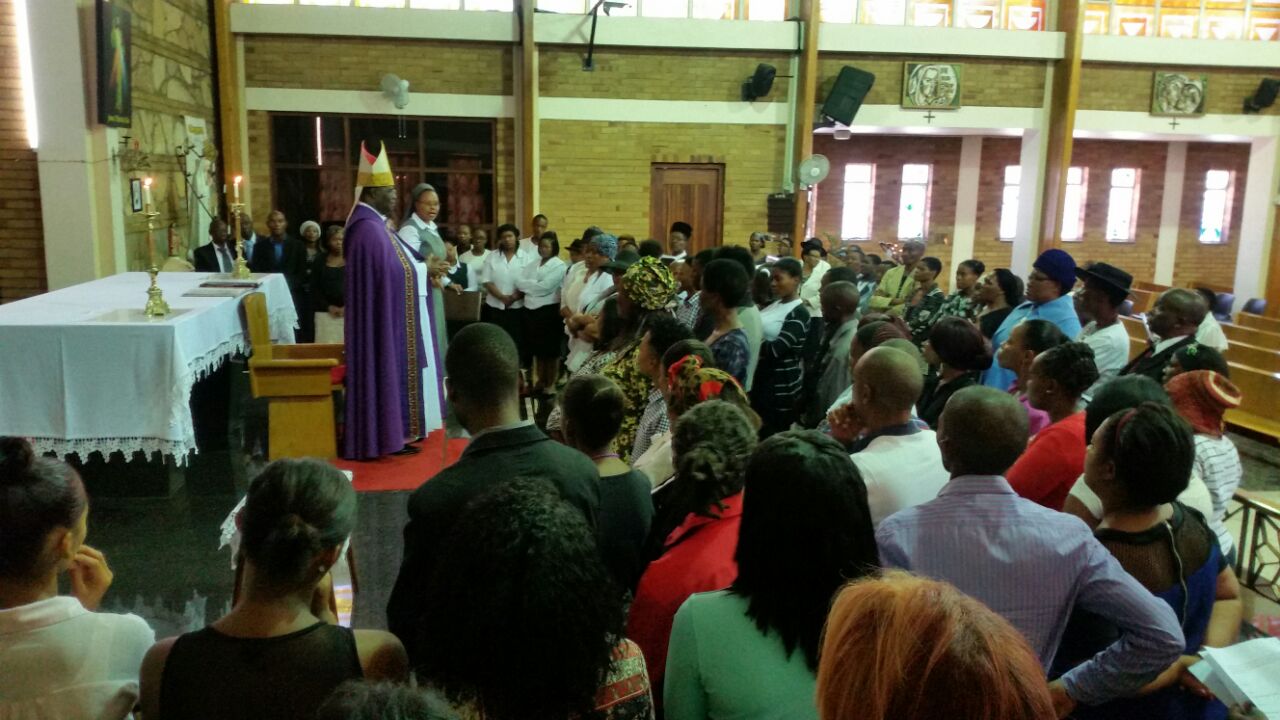
Adult Confirmation 2017: The newly confirmed together with Archbishop Nxumalo after Mass.

Fr Johnson greets parishioners after Mass on Sunday 13th May.

The closing ceremonies of the Centenary celebration of our Lady of Fatima, 2017.

ORATORIAN COMMUNITY IN FORMATION: 13TH SUNDAY OF THE YEAR - 2017

Paul the Apostle in prison, writing his epistle to the Ephesians.
Paul's later letters were written while he was in prison in Rome: they are known as the "Captivity letters."
Here the artist imagines Paul in prison, writing his letter to the Church at Ephesus.

Today’s Second Reading, from the letter to the Galatians, gives us Paul’s great teaching on freedom. It is summed up in that letter in the words, “Where the Spirit of the Lord is, there is freedom.”
Paul makes an interesting contrast. He does not oppose freedom with slavery, or imprisonment, or oppression, or captivity; he contrasts it with self-indulgence. And by self-indulgence he does not mean what we usually mean; gluttony, lust or any of the other modern types of materialism we hear about with such regularity. For Paul, self-indulgence means two things; lack of love for neighbour, and failure to be guided by the Spirit of God.
For Paul, we cannot love one another, nor can we live at peace with one other, without the freedom from self-centredness, from self-indulgence, which only God’s Spirit can bring about in us. He uses the most common example of this in our lives; our extreme willingness to find fault with others, to snap at people for the faults they have that annoy us. We recognise how intolerant we can be of others’ weaknesses, and especially of their criticisms. But we are outraged when someone dares to tell us we are wrong about something, especially when that person has faults of his own. And how often do we lash out in kind; we counter someone else’s criticisms of us by criticizing them, hoping to neutralise their words by revealing to them that, since they are no better than we are, they have no business criticizing us. In this way, marriages, families, cities and countries are torn apart or reduced to tattered shreds.
This is what Paul refers to as self-indulgence. It is one of the worst characteristics of human beings. It is one about which we moralize, one which we try to rectify by human means, through endless counseling, group discussions and platitudes.
But there is no real human solution to it. We have no human ways to correct each others’ sins; in fact, we are not going to correct people’s sins at all. Each one of us can help only ourselves, in this regard, with the help of God. But, like God, and with his help, we can learn to live with the sins and weaknesses of others, and to find ways of encouraging them to turn to God, who will change their weaknesses into strength. We need not to indulge our resentfulness and anger towards others, but to be sources of healing to them. This we will only ever be if we are mindful that we ourselves are sinners, that we need to be enfolded in the liberating power of God’s Spirit. Only when we are possessed of the freedom of God’s Spirit will we be truly free, free especially from the self-indulgence of a mean human spirit.

This is one of the prime characteristics of the saints. They lived for God, not themselves, and in the same freedom of the Spirit, and through it, were able to love their neighbour as themselves, no matter what their neighbour’s weaknesses and faults. May we, following the exhortation of Paul in the letter to the Galatians today, find the source of our strength in God, that we too might enjoy that same freedom in his Spirit, and love our neighbour as ourselves.
Fr Phillip.

Saturday, 17 June 2017

ORATORIAN COMMUNITY IN FORMATION: CORPUS CHRISTI - 2017


From our earliest days as Catholics, whether from the cradle or as adult converts, we have been taught that the Body and Blood of Christ which we receive from the altar are but shadows and sign of the heavenly reality that we one day hope to experience. The Eucharist is without doubt the most powerful of all realities for a devout Catholic. But how closely in fact do we relate our faith in the Real Presence with the actual person of Jesus?
            The Eucharist brings us face to face in an encounter with a living person; the person of Jesus Christ. He once walked the earth amongst us. He taught with authority. He healed. He drove out demons from the possessed. He showed power and authority over nature when he multiplied the loaves and fishes or calmed the storm at sea. He even, incredibly, had the power to raise people from the dead. Most wonderfully of all, he, the Son of almighty God, was able to empty himself of all his power and authority, become a humble human being like ourselves. He was able to place himself in our power, to suffer at our hands and die on our behalf and to rise from the dead, breaking the power of the one thing that humans fear above all and cannot avoid; the inescapable power of death over us, which before him was the one certainty of our human existence.
            All this was done by someone to whom we could reach out, whom we could touch as surely as we could reach out and touch the person sitting beside us in this church; someone with whom we could speak, whom we could know and love as surely as we can know and love anyone on this earth. But how can we encounter someone who lived so long ago, who as a being of flesh and blood has so long passed from our existence, beyond our knowing him as his contemporaries know him? That is the question to which Corpus Christi supplies an answer.
            When Jesus passed through death and was raised in the Spirit, he passed beyond mere mortal existence. He moved into a realm of eternity which we can scarcely grasp. His glorified risen body was no longer bound by time and space so that, through the same Spirit who raised him from the dead, he is able to make himself present to us, to live amongst us, at any time and at any place in the reality of our existence. He is always near to us, wherever we are and whenever.
            One of the ways in which he comes to us is in the Eucharist. In it, he gives himself to us as he gave himself to his disciples at the Last Supper. In the Eucharist, we sit at table with him as surely as the Twelve did in Jerusalem two millennia ago. That event is as alive to us now as it was then; and it is made possible because his risen, glorious body is no longer bound by time and space. In our hearts, we understand this when we receive Holy Communion at Mass.
            But the Body and Blood of the Lord Jesus are not ends in themselves. We worship a person, a living Lord. And it is he for whom we must earnestly search, whom we must discern in the Eucharist. The Eucharist is a living link that brings us face to face with Jesus, and encounter between us and the living Lord who has destroyed for us death, the greatest of all our enemies, and who makes us fit for eternal life with God. He is waiting for us in that encounter. “Behold, I stand at the door and knock,” he says. “If anyone opens to me, I will enter and sit down to table with him.” That is exactly he wants to do in the Eucharist. And the door that we must open is that of our hearts. Let us welcome him thus into our lives; today and henceforth.


Fr Phillip

Saturday, 10 June 2017

ORATORIAN COMMUNITY IN FORMATION: TRINITY SUNDAY - 2017

This beautiful image of the Holy Trinity is to be seen in the Trinity Dome of the Basilica of the National Shrine of the Immaculate Conception in Washington D.C., USA.

We read in the 11th chapter of Paul's letter to the Romans, the following words:

            "O the depth
            of the riches
            and wisdom
            and knowledge
            of God;
            how impossible to understand his judgements and
            how difficult to follow his ways.

            For who knows the mind of the Lord?
            Or who could be his counsellor?
            Or who could give him anything,
            and have to be paid back by Him?

            For from him
            and through him
            and in him
            exist all things;
            To him be glory through the ages, Amen."

Trinity Sunday is by tradition one of the days on which Christians of the various churches come together to pray for Christian unity.  "God is three, yet God is one," so the ancient formula goes. Surely, many ask,  this is a sign of unity in diversity for the many different denominations of the Christian Church?

Would that it were that simple! for the division of Christianity is a countersign, a sad reminder that we are sinners. But three-ness-in-oneness is an unfathomable mystery of God. There must be thousands of ways through which this three-ness-in-oneness has been explained. Even musicians have tried. When the organist strikes a chord, it consists of many single notes played together.  But there is still only one chord, so that that chord, a single sound, is both one and many. So is the three-in-one God, sublime and serene in his majesty. In Church music there are often many groups of voices, male and female,  high and low,  singing together at once. But there is only one choir, so that many voices, interplaying and combining the same melody in many ingenious and varied ways, speak in vigorous concord and perfect unity. Thus is God in his creation, the Father, Son and Spirit ceaselessly at work, never in repose, yet one in purpose and nature.

But whatever the model we use to explain the Trinity, or three-in-oneness of God, its nature remains eons beyond our grasp. The very word "Trinity" is an absurdity, for what is a "Tri-unity"?  Though we are called to know God, who reveals himself to us, His three-ness-in-oneness will remain forever beyond our grasp. The divine mathematics of 1+1+1=1 is a reality which bursts asunder the reality within the grasp of our senses. It lives intangibly as an article of faith at the very borders of our intuition.

Paul the Apostle speaks truly when he refers to the "depths of the riches and wisdom and knowledge of the Father." For the Jewish mind depths were the bottom of the sea, and the seas were the remnants of the chaos which preceded the creation, and the only being who controlled the depths was God himself, who had populated then with great sea monsters with which He could "play." The Greek word for depths, bathos, calls to our mind a picture which is remarkably similar though seen through a different window; the window of the bathyscaphe, one of the earliest deep sea diving vehicles, through which we saw visions of the incomprehensible creatures living at those tremendous depths, surviving under vast pressures in the inky darkness at the very bottom of the oceans. It is a world beyond our reach, unless it is somehow made open to us.

But our faith must start with the single most important fact of God's Revelation, the crux without which the Old Testament, indeed the whole Bible, falls apart; that God is One. "Hear, O Israel, the Lord is your God, the Lord is one," says the creed of Israel in the book of Deuteronomy. "And you shall love the Lord your God with all your heart and with all your soul and with all your might and with all your understanding." We do not worship a multiplicity of gods; we worship One God. However we might encounter God, in whatever form, he is the One God, the Only God, the Creator of heaven and earth, the Redeemer, the One who brings all things to fulfilment. He is the Lord. Before all other articles of Faith, we confess in our worship, "I believe in One God." There can be no other foundation for our Faith.

Yet we encounter God in a threefold way. We are aware of him as One who not only creates, but who cares for and sustains his creation, who is intimately involved with it. This protecting, providing God has revealed himself as a Father. It is an image of God within our grasp. But the God who identified himself to Israel as a Father was still a remote, other God even to look upon whom meant death. He manifested himself in earthquake, fire, thunder, lightning and smoke. He inspired terror. Israel's link with him was his Law, which he gave to them.

But God wanted to reveal himself to us more intimately, more approachably. He did this through the person of Jesus, the "radiance of his glory and the exact likeness of his nature." He did this so that we "might see and know in him what we see and know in Christ." Jesus was revealed to us as the Son, and in Jesus' sharing of the Father's nature, authority and purpose, his son-ship is made clear to us. But the Son is not revealed as merely a human person with some of the attributes of God. He is revealed as partaking in the very nature of God the Father. "Know that I am in the Father and that the Father is in me." "The Father and I are one." The Son is God after the nature of the Father, yet he is distinct from the Father.

When Jesus in turn speaks of sending the Spirit, he affirms the distinctness of Father and Son; he then speaks of the Spirit as a distinct from both of them. The language he uses leaves us in no doubt that in speaking of the Spirit he is speaking of a person, not merely some vague active force of God.

The language of John in particular confronts us with Father, Son and Spirit as distinct persons. It is the Spirit, blowing where he wills throughout time and space, the life and breath of God's Church, who makes the historical Jesus present to us here and now. And it is the Lord Jesus, living within us, who shows us the Father. In another context, we speak of the Father as Creator; the Son as Redeemer; the Spirit as Fulfiller.  We are confronted with three distinctive experiences of God, through three distinct Persons. And yet we are to believe that God is one. How are we to grasp this mystery which none can explain?

It was just this mystery which caused the Fathers of our ancient faith to formulate the doctrine of the Trinity. "God is Three in Person, yet God is One in nature," they said, throwing up their hands in despair of ever comprehending. This is the clue to our own understanding. The doctrine of the Holy Trinity is an ending, not a beginning. Having encountered the One God as Father, Son and Spirit, what else is there to say? But the fact that we cannot hold the two teachings together without diminishing either the oneness of God or the distinctness of the Father, Son and Spirit, does not mean that God cannot. It is at this point that well known cry of our old Irish seminary professors, "'Tis a mystery!" acquires its deepest meaning. We can grasp the Oneness of God, since our Faith depends on it. We can grasp the distinctness and equality of Father, Son and Spirit, since this is the experience of our Christian lives. Having grasped them, we need to hold them as individual truths, affirming the fullness of both, without troubling ourselves as to how they fit together, since we will not harmonise the two truths without diminishing one of them.

We need to be like a blindfolded tightrope walker, crossing the Niagara Falls on a single-wheeled bicycle, juggling one large ball in the left hand and three smaller ones in the right. As long as he moves forwards and keeps all the balls in perfect motion, he will not lose his balance. Let him drop just one, and he will overbalance and plunge to his death. The doctrine of the Trinity is something like this.


"Hear, O Israel, the Lord is your God, the Lord is One. And you shall love the Lord your God with all your heart and with all your soul..." There is a depth of wisdom in that ancient Hebrew creed. God is One, and He is the Only God, and he is the God we worship. Whether we understand his deepest mysteries or not, we are called to love him with all that is within us, and to keep his word. In this way, he will make his home within us, and bring us ultimately to make our home within him. Our end is to live with him forever, to exist for all eternity within his depths, to gaze upon him and to contemplate his impenetrable riches and wisdom and knowledge. Then his three-ness-in-oneness will no longer matter, for we shall simply know him as he is, and that knowledge will be beyond anything we can imagine now. Let us then praise the Living God, the one and only God whom we adore; for "from him and through him and in him exist all things. To him be glory through the ages.  Amen."

Saturday, 3 June 2017

ORATORIAN COMMUNITY IN FORMATION: PENTECOST - 2017


Have you ever wondered about the shape of the bishop’s mitre? Why should he wear such an odd headdress when he leads us in worship? This, and many other things, go to making up and reflecting the meaning of the Solemnity of Pentecost. When the Holy Spirit descended, two tongues of flames descended upon the head of each Apostle. The two points and red lining of the mitre remind us of this. They also remind us (and the bishops!) that they are the successors of the Apostles, tasked in the world with being first and foremost, witnesses to the Resurrection of Jesus Christ in all times and places.
            The events of Pentecost also bring to mind those of the Tower of Babel. There, human beings tried to climb to heaven without God. They were so affected that each group or tribe spoke a different language and could not understand the others. They scattered over the earth in order to avoid warring against each other. This great parable from Genesis reminds us in unequivocal terms that without God as the centre of all things, there can never be unity or peace amongst men. Pentecost, when all those present heard the Apostles as though they were speaking their own language (with Galilean accents!) is a reversal of Babel. By destroying sin and restoring life, Jesus destroys the separation of Babel and restores that peace and unity – something that He alone can do.
            The Preface for Pentecost, which we hear at Mass today, expresses it like this: “…you bestowed the Holy Spirit today on those you made your adopted children by uniting them to your Only Begotten Son. This same Spirit, as the Church came to birth, opened to all peoples the knowledge of God and brought together the many languages of the earth in profession of the one faith.” Could it be any clearer that real unity comes through the work of the Holy Trinity, not that of the United Nations or the scattering of modern secular “peacemakers.”
            But perhaps the most miraculous event of Pentecost was the crowds themselves, who listened to Peter. They were Jews from every corner of the Roman Empire, who had come to celebrate the Passover in Jerusalem. For many of them, it was a once-in-a-lifetime experience. The Passover was a celebration that lasted “a week of weeks” or fifty days. This was, literally, the last day of the feast, and no doubt many who heard Peter’s sermon were having a final look around at all the famous sights of Jerusalem. If you were to draw arrows on a map from Jerusalem to the places from which they came which are listed in Acts 2, those arrows would point away in every direction. And we are told that on that day, two thousand were added to the number of Christians, mostly people who would be returning to their widespread, far-flung homes.
            Two thousand baptised Christians moving out into the known world in every direction, within twenty-four hours of the coming of the Holy Spirit, many of whom had seen the death of the Saviour!  One cannot but think of Jesus’ words to his apostles, “Go out to the whole world and proclaim the Good News…” and of the words of the prophet Malachi, that “…in every time and in every place, incense may be offered up unto my Name, says the Lord.” The proclamation of the Good News by Peter, and thus by those two thousand converts, that “He is risen…He is Lord…He has ascended…He will return…repent and be baptised,” is still Jesus’ commission to us today. It is through us that Jesus must be made known. As the Holy Spirit sent those first converts and Apostles out in every direction, so may he send us out today to proclaim the same Good News “to the whole world.”


Fr Phillip

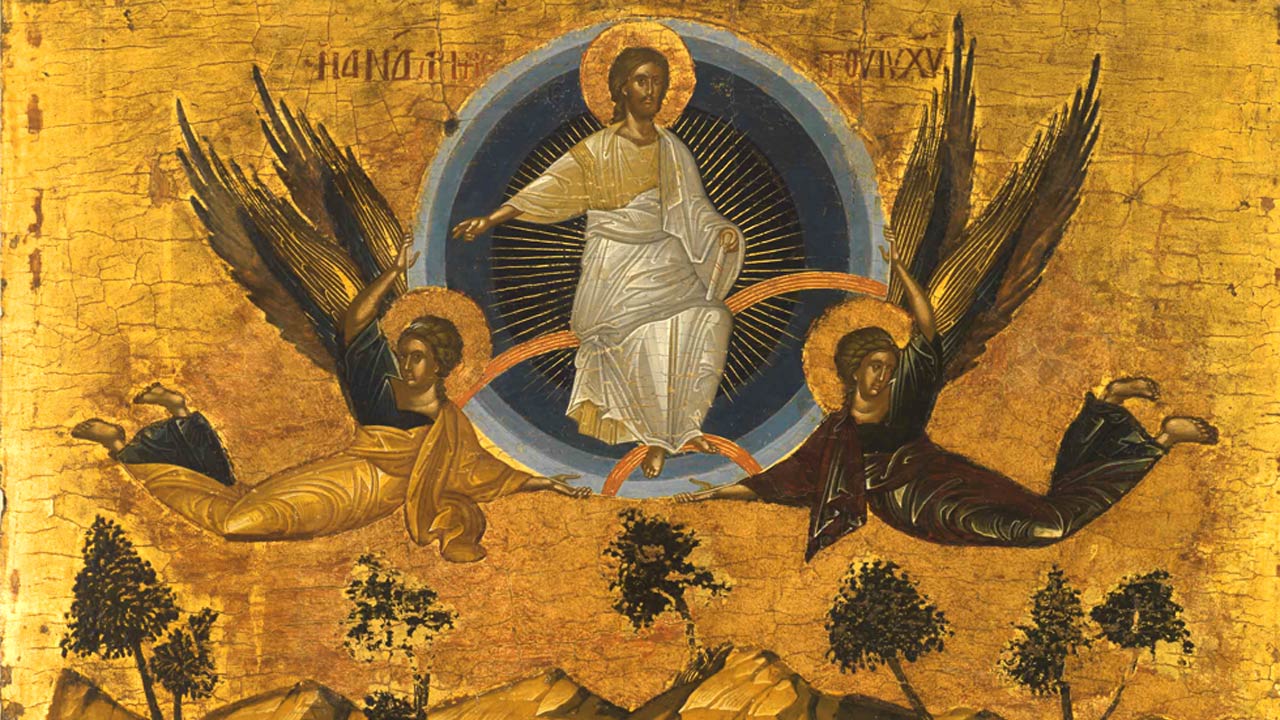
ORATORIAN COMMUNITY IN FORMATION: SOLEMNITY OF THE ASCENSION 2017


When a beloved relative departs after a visit, they might travel by aircraft to their destination. We watch the plane taxi to the runway, take off and lift into the sky. How quickly it becomes just a small dot in the heavens, before it passes beyond the clouds and vanishes from our sight. We know that the same plane, flying away from us, exists beyond our sight, and that the person we have seen off is still flying in it, even though we see it no longer. And we know that if that person visit us again by air, we will see the plane reappear out of the sky in very much the same way as it departed.
Jesus’ Ascension is very much like this. When he leaves his disciples on earth, he makes two comforting promises: that he will prepare a place for them in heaven, his home, and that he will return to take them back with him, never to be separated from him again. The separation caused by his Ascension will be temporary; and while they wait for him, they are charged with spreading the Good News of his death, Resurrection and Return to the whole world, so that when he does return, there will be many whom he will take with him into his eternal kingdom.
This promise is for us as well. If we love him and long for him, he will prepare a place for us. But as with his Apostles, he expects us to share the Good News with those around us. How we speak, how we live; how our witness draws others to Jesus; all this is part of the way that we prepare for eternal life with him. Salvation, heaven, are not gifts given to us for ourselves alone; we are to be the means by which others are brought to God. As we go about our busy daily lives, let us keep this thought in mind. Through our actions may many others be brought to Jesus, that he may prepare a place for them as well as us.

Fr Phillip.

Friday, 19 May 2017

ORATORIAN COMMUNITY IN FORMATION: SIXTH SUNDAY OF EASTER -2017

Image result for ASCENSION

When Gustav Mahler composed his Third Symphony in the early 1900’s, he wanted to make it a vast hymn to God’s Creation. He built up its six movements in a hierarchy leading from inanimate matter, through plants, animals, human beings and angels, right up to God himself. Of this last part, he said: “I have called this movement ‘What loves tells me’, but I might have called it ‘What God tells me’, since for me God can only be conceived as love.” He made clear exactly what he meant by affixing to the beginning of the music, two lines of German poetry in which Jesus addressed his Father:
              Father, look upon these wounds of mine;
              let not one of your creatures be lost to you.”
The image of love that this Jew turned Catholic chose to give, was that of the Resurrected Jesus pleading for us before the judgement throne of God, asking him to forgive our sins since he has died on our behalf, and has already paid the price for them.
This image of Jesus the Advocate, whose blood, as the letter to the Hebrews has it, pleads more insistently than Abel’s, is one which should be of great comfort to us. We do not appear before God’s judgement in the hope of being found “not guilty”; we are all sinners, and therefore guilty of the sins of which the infallible judge convicts us. Our hope is entirely based on hope of mercy, of forgiveness. In the words of one of the weekday Mass texts:
              In love you created man,
              In justice you condemned him;
              but in mercy you redeemed him.
It is the hope of the Prodigal Son, who admits, in his conversion of heart, “Father, I have sinned against heaven and against you; I no longer deserve to be called your son.”
But God’s mercy knows no bounds; it is his love as it applies to us sinners, and his love is boundless. “God loved the world so much, that he gave his only, so that whoever believes in him might not perish, but have everlasting life. For God sent his son into the world, not to condemn the world, but so that through him the world might be saved.” The Jesus who pleads for mercy on our behalf, was in the first place sent by the one who judges us.
But God does not leave us with one advocate to plead our cause; in the words of Jesus in today’s Gospel, he promises us another Advocate. Jesus must leave us and return to his Father in heaven where he pleads our cause. And he sends us that other Advocate, or as the Greek word has it, Paraclete, to be always with us here on earth.
Think for a moment of all the roles an advocate has to play in the life of the accused person he is representing. He knows the law, and argues the case on behalf of his client. He advises his client on what to say and do, how to behave. He even, when things look like they are going against his client, needs to be a source of comfort.
And this is precisely what the Holy Spirit does as we wait for Jesus to come again. The Spirit guides us both as individuals and as a Church. The Spirit makes us aware of the salvation of Jesus at work in our lives, and the presence of Jesus himself within us. The Spirit leads us to live as though our lives depended upon it, and thus prepares us for our judgement. Amidst the difficulties of life, when temptation to turn away from God is ever before us, and when we sometimes have no hope of ever being able to escape the bonds of sin. it is the Holy Spirit who comforts us and brings us new courage and determination. Without the Holy Spirit to guide us as we wait for Jesus to return, we might in fact not even be ready for him when he does return.
So it is that the Holy Spirit needs to be a major factor in the way we live our lives. Even as Jesus prepared his disciples for his departure, he prepared then for the coming of the Holy Spirit. As the Church has progressed through the Easter season, you will have noticed how the theme of the coming of the Spirit, leading up to the feast of Pentecost, has become more and more prominent in the Scripture readings at Mass.
The Apostles spent the days that fill the gap between the Ascension and Pentecost, waiting and preparing for the coming of the Spirit. These nine days are the Church’s original novena, a novena being a period of nine days of preparation and prayer. As we reflect on all that Easter and the coming of the Spirit means to us, and we have seen that it means a great deal, perhaps we need to spend a lot more time preparing for this great event in our lives in Christ. There is, in fact, a special novena through which we all can consecrate ourselves to the Holy Spirit and thus prepare ourselves for his coming at Pentecost.
The Holy Spirit transformed the lives of the Apostles on that first Pentecost day, turning them from a group of frightened men hiding away in the Upper Room, into a band of fearless proclaimers of Jesus Christ, who spread the Good News and renewed the face of the earth. If we really want him too, he will transform our lives in the same way.

Monday, 15 May 2017

ORATORIAN COMMUNITY IN FORMATION - FIFTH SUNDAY OF EASTER - 2017

Related image
About ten years ago, the press “exposed” a Cape Town club which had alleged­ly been running a brothel. Some of us might remember, right back in the Eighties, the horrid and embarrassing incident of the “Squidgy” telephone call between Princess Diana and a sup­posed extramarital lover, to which it was possible to listen on what was called a “hot line”? How often do we approach our media, be it newspaper, news magazine or broadcast, only to find the real news displaced by yet another exposé of “the truth,” as such publications like to call it?
If one were to ask an editor about the heartache and humiliation, the destruction of homes, happiness and lives which these exposures entail, we might receive answers on these lines: “The public have a right to know…we are here to serve the truth, we can’t help it if others behave like this…The consequences are no concern of ours, our task is just to publish things as they are…” and so on. And, of course, scandal increases circulation, and increased circulation increases profit, not that anyone, God forbid, should publish “the truth” merely for these reasons.
Tellers of Truth in the modern media are today largely distinguishable by two characteristics: a high level of moral indignation and self-righteousness, and a refusal to be held accountable for their views, though they hold others accountable for their actions in no uncertain terms. In fact, moral indignation is the principal means by which they thwart anyone trying to bring them to account.
It is a sad fact that many Christians take the same easy option which the modern media have embraced, and exercise the same ruthless and unforgiving moral indignation against their neighbour. This idea of truth as a harsh exposure of wrongdoing is in fact the antithesis of what God and the Scriptures have to say on the subject.
The Old Testament teaching on truth is to be found it the shortest of all the Psalms, Psalm 117. In the Authorised Version it reads as follows:

O Praise the Lord, all ye nations,
Praise him, all ye peoples.
For his merciful kindness is evermore towards us,
And the truth of the Lord endureth forever.

The significance of this passage, is that it joins together two of the closest-linked ideas in the Old Testament: ideas represented by the Hebrew words hesed and emet.
Emet is the Jews’ word for truth. Truth for the Jews is not to be confused with the passing facts of everyday existence. “Squidgy” is not truth for them, since who even today really remembers the facts of that story? Truth, for the Jews, was that which is revealed by God, things of eternal significance and endurance. “The truth of the Lord endures for ever.” One somehow does not think, thank God, that “Squidgy” will endure for ever. God in three persons; the Word made Flesh; the death of the Saviour of the cross; The coming of the Holy Spirit; the Consummation of all things at the end of time; “God is Love’; these are emet, and for a Christian, there can be no other kind of truth. For a Christian, in fact, all truth is summed up in the person of Jesus: “I am the Way, the Truth and the Life.”
But the idea of emet, or truth, is bound together with that of hesed. There is no single English equivalent, but the Authorised version comes very close to it with its “merciful kindness.” Compassion would be the single word which most closely captures its meaning. It is an idea which stretches through the Old Testament, particularly in passages such as:

 The Lord is kind and full of compassion,
 Slow to anger, abounding in love.
How good is the Lord to all,
Compassionate to all his creatures.

Here is the heart of divine Truth; that God, who is truth, is kind and compassionate. God’s moral law is absolute, but God applies that law with love and compassion, raising up, forgiving…yes, forgetting. “I will turn my face from their iniquities, and never call their sins to mind.” The sins of man are in the first place offences against God, yet it is God who is “slow to anger.” The picture which emerges here is quite the opposite of the newspaper idea of truth as an exposure of others’ sins. For God, human sins are offences against the truth. But they are offences which God wants to forgive precisely because they are an affront to the truth. “It is not the death of the sinner that I require, but his repentance.”
God’s reaction to human sin is not to seek the humiliation and destruction of the sinner, but his redemption. It is a singular fact of Christianity, and one which we take into too little account in the day-by-day practice of our faith, that it is God, who is affronted by sin, who humiliates himself on our account in order to achieve our salvation. “on Him lies a punishment that brings us peace, and by his stripes we are healed.” In this union of truth and loving compassion are echoed the powerful words of the Gospel of John: “The truth will set you free…when I am lifted up from the earth I will draw all men to myself…I am the Way, the Truth and the Life.”
Has the editor who exposes the sins of others (who very likely have never offended him) in the name of “printing the truth,” any idea of the exalted meaning of that word in the mouth of God? For that matter, have Christians who wax indignant over the sins of others, and spread gossip all round, albeit in hushed, self-righteous tones of “How shocking!” any better an understanding of the God who has called them, loved them, and died in humiliation on the cross for them in order to redeem them from their sins?
On many occasions people, both Catholics and others, have spoken with me about the confessional. Not a few have articulated the idea that a priest “knows the truth” about the members of his congregation. In that fact they are right; but they are generally most wrong as to what exactly “the truth” is. For, as any priest will tell you, it has nothing to do with whether Mr. X and Mrs. Y are having an extramarital affair, or what sort of dirty thoughts Miss Z enjoys, or even whether Mrs. Q is a secret tippler, who finances her beverage out of the petty cash.
The truth that comes out of the confessional is “the truth (which) endures for ever”; that human beings are created in the image of God; that we have fallen short of the glory of God; that we are in desperate need of redemption; that God in his loving compassion has given us a Saviour who died that we might be forgiven; and that in those words “I absolve you from your sins…” we have the absolute certainty that our sins have been forgiven in His name. That is the astonishing and miraculous truth of the confessional; all the rest is just passing detail. Sin, after all, is marked down for total destruction; it is the truth of the Lord that endures for ever.
Truth, in God’s mind, consists of unchanging, eternal reality, and there can be no truth without the hesed, the loving compassion of God. If we wish to serve that truth, our task is not to humiliate and expose in self-righteousness. It is rather to come in humble service to our brother or sister, and self-effacingly to help them to find their way back to God, keeping all the time before our eyes the fact that we ourselves are sinners in need of his mercy.

“There is more rejoicing in heaven over one repentant sinner than over ninety-nine righteous men.” May God bring each one of us to a self-knowledge of our own sinfulness, and may he use us, through loving compassion for one another, in service of his eternal truth, so that many might find their way to him, and learn to know his love and forgiveness, and so in turn be brought to knowledge of the Truth that endures for ever.

ORATORIAN COMMUNITY IN FORMATION: FOURTH SUNDAY OF EASTER - 2017

Image result for pentecost peter's sermon
"The whole House of Israel can be certain that God has made this Jesus whom you crucified both Lord and Christ."
The sermon of Peter in Chapter 2 of the Acts of the Apostles is the first Christian sermon, and the model for all Christian sermons. The reading itself focuses on the results of that sermon, and moves from the opening sentence, where Peter calls the crowd to attention, to the climax, his proclamation that "The whole House of Israel can be certain that God has made this Jesus whom you crucified both Lord and Christ."
He proclaims that God has made Jesus Lord and Christ, the anointed one, priest, prophet and king, who rules all creation from God’s right hand. In contrast, his hearers are responsible for God’s anointed one, the hope of Israel, being crucified.
The contrast between the action of crowd in crucifying Jesus, and of God in making Him Lord and Christ, strikes home, for his listeners are “cut to the quick”.
The frightening conclusion that Peter's listeners come to is that, by killing God's Chosen One,  they have placed themselves in a position of unforgivable enmity with God. There is a note of desperation in their question to the Twelve, "What must we do, brothers?" Peter first, tells them three things they must do:
"You must confess your sins." The listeners were righteous Jews, in Jerusalem from all over the civilised world for the Passover. They are now told to confess that far from being righteous men as they would have supposed, they are sinners.
"You must be baptized." Baptism was for the Jews a ceremony performed when a pagan became a Jew. It was a symbolic washing away of the filth of idolatry as the person became a member of God's Chosen People. Peter now tells them that, though they are Jews, they must be baptized. "in the name of Jesus," not only as a symbolic washing away, but "for the forgiveness of  your sins."
"Receive the free gift of the Holy Spirit." This is the gift the Twelve have just received, and which they now set out to share with their first converts.
The second section of Peter's answer must have brought wonderful comfort and hope to his listeners. All that Peter has said is a promise which has been made "to you and to your children and to all those who are far off." It is hard here not to make a comparison with the terrible words uttered by the crowd to Pontius Pilate on Good Friday: "His blood be upon our heads and upon our children's." This curse is now blotted out with a blessing. What is more, it is made to "whoever should call on the name of the Lord their God," in other words, the name of Jesus. Tongues which had called down the blood vengeance of the Lord upon their heads are now invited to call upon his name for salvation!
Peter finally calls on them to "Save yourselves from this wicked generation." Those who put Jesus to death, and refuse to repent of this crime and believe in the Good News, are setting themselves up in opposition to God, and thus adopting false worship. It is not the crime of killing the Lord's anointed that counts, so much as repentance for that deed. Similarly, it is not the crime which sends the "wicked generation" to its end, so much as its stiff-necked refusal to repent.
This message was one of great comfort to its first receivers. It should also be a comfort to us. We are sinners who have rebelled against God. We all share in the death of the only Beloved Son of God. When challenged that his film The Passion of the Christ was anti-Semitic, Mel Gibson gave just this answer. He said that the first person he would accuse of the death of Christ, was himself. It was his own hands that Hammered in the nails in the movie.
We are stiff-necked, rebellious, intent on doing and believing what we want to do, no matter how it squares up with what God wants us to do. We would rather have our own way; if it comes to a choice between what is desirable to us and what is pleasing to God, how often do we choose our own way, and shut God's way out of our lives! When it comes to a human confrontation, how often do we, in our attitudes, actions and words, particularly in our witness to other people, fail to acknowledge him as the Lord and Christ.
If it were dependent upon our sins, upon what we do, we would all be damned. But the wonderful message of hope in today's First Reading is that it does not. It depends not upon our sins, but upon God's mercy. Despite all the offences we have committed against God, he has decided to wipe them away, and never to call them to mind. And he does this through the same Jesus whom we brought to his death. And all God asks of us is that we repent. After the violence with which the human race greeted the coming of its Saviour, comes God's mercy and his call to repentance, with its promise of redemption.

Let us rejoice in the words he addressed to us through Peter in today's First Reading. Let us repent, we who are far off, and call on the name of the Lord, for this promise of salvation is for each one of us. Let us indeed repent, and be saved from this evil generation.

Friday, 28 April 2017

ORATORIAN COMMUNITY IN FORMATION: FR PHILLIP APPOINTED REC AT CBC

With the retirement of Mrs Sandy Millward as Religious education Coordinator at CBC at the end of 2016, St Joseph's Christian Brothers' College, Bloemfontein has appointed Fr Phillip as REC in her place. Fr Phillip teaches Religious Education Grades 4-12 and Creative Arts Grades 7-9. He is responsible for the school's six choirs and liturgical celebrations.

St Joseph's celebrated its 75th year of existence in 2015. Its Principal is Mr Wally Borchard.

The main entrance to St Joseph's Christian Brothers' College, Bloemfontein.

BLOEMFONTEIN ORATORY IN FORMATION: FR XOLISA MAFU CHAPLAINS THE KNIGHTS OF DA GAMA.

Fr Xolisa Mafu has been appointed as both local and regional chaplain of the Knights of Da Gama. The Regional Council consists of the Free State, Kimberley and North West councils. The Regional Council met last Saturday in the Donovan Hall at the Sacred Heart Cathedral. This was followed by their Corporate Mass at St Joseph's parish, the Archbishop presiding, and dinner at the New York restaurant.

Fr Xolisa is also a consulter for the Archdiocese of Bloemfontein.
The Archbishop celebrates the Corporate Mass of the Knights of Da Gama last Saturday evening, 22nd April, at St Joseph's, Bloemfontein. Fr Xolisa Mafu and Fr John Nolan, a former Cathedral Administrator, concelebrate.

BLOEMFONTEIN ORATORY IN FORMATION: THIRD SUNDAY OF EASTER - 2017

"...and how they had recognised him in the breakking of the bread..." Matthias Stom, Supper at Emmaus.
How often in the lives of Jesus’ disciples did he say or do something they did not understand. But we are frequently, told that “After he had risen from the dead, his disciples remembered…and believed.” In other words, the Resurrection threw a whole new light on Jesus, his life, his words and his works. The Resurrection is the event that made, and still makes, God’s purpose” for his whole creation clear. We are told, in the hymns at the beginning of Ephesians and Colossians, that his plan was “to unite all things in Christ, making peace by his blood on the cross.” The whole of Creation is at war with itself because of sin, and sin has to be destroyed “by the blood” before we can be “united in Christ.”
This role of Jesus as Redeemer literally “risen from the dead” was a difficult one for his followers at first. The two disciples on the way to Emmaus are a case in point. After the death of Jesus they were deeply depressed, all their hopes in Jesus, as they thought, having been disappointed. So disappointed that when Jesus joins them, they do not even recognise him In fact, they say to him, “You must be the only person in Jerusalem who has not heard…” of Jesus’ death, a wonderful irony that must have amused Jesus no end. It is only after they have heard Jesus explaining that the scriptures point inevitably to his death and Resurrection that they recognise him “in the breaking of the bread.”
Jesus’ Resurrection really does change everything. It truly does roll back sin and death. The world may hate him, sneer at him, ignore him, persecute his followers. But whatever it does, it cannot achieve the ultimate victory. “In the world you will have sorrow, but be brave; I have already conquered the world,” he tells his disciples on his last night on earth. That message is for us all. In the words of the Apostle Paul, “He that endures to the end shall be saved.”
How real is the Resurrection to us? Real enough so that there is nothing in the world that we fear? Real enough so that, as Paul puts it, “Nothing can separate us from the love of Christ.”? Real enough so that when the world and the Resurrected Lord are in conflict, we will unflinchingly choose the latter, no matter what the consequences might be? Again, in the words of Paul, “In all these things we are more that victors through the One who loves us.” Jesus is alive more really than even we are alive, for he is beyond death. If we want to share in that ultimate life, we must allow his Resurrection to become the greatest reality in our lives.  Then, whatever happens, we can be assured that indeed, “Nothing can separate us from the love of Christ.”

Fr Phillip.

Sunday, 23 April 2017

ORATORIAN COMMUNITY IN FORMATION: EASTER AT ST JOSEPH'S – 2017

One of our parishioners posted on FB, this beautiful photo of the St Joseph's sanctuary as it was set up for Easter. With her kind permission, we are placing it here for our whole community to enjoy. Many thanks, Michelle.


ORATORY COMMUNITY IN FORMATION: FR JOHNSON ADDRESSES UNIVERSITY AND SPEAKS ON RADIO

On Friday 21st April, Fr Johnson addressed a distinguished academic audience in the Afrikaans Department of the University of the Free State. The topic was the Apostolate of the Catholic Church. As part of the address, he played the Missa Brevis "John Henry Newman." The address was very well received.

Earlier in the day, Fr Johnson also recorded an interview on Radio Rosestad on the same topic. The interview will be broadcast in June.
Fr Johnson together with Prof. Johan Roussouw of UFS.

ORATORIAN COMMUNITY IN FORMATION: MAY CELEBRATION OF OUR LADY OF FATIMA - 2017

This May sees the celebration of the 100th Anniversary of the apparition of Our Lady of Fatima. There will be a full programme of celebration at the Sacred Heart Cathedral. Here is the programme:


ORATORY COMMUNITY IN FORMATION: RECENT PUBLICATIONS - 2017


Friday, 21 April 2017

ORATORIAN COMMUNITY IN FORMATION: PHOTO GALLERY, FIRST QUARTER OF 2017


Here is a selection of photographs showing recent events and liturgies in the Sacred Heart Cathedral and St Joseph's parish.
Distribution of ashes on Ash Wednesday, evening mass.

RCIA - Election of candidates during Lent. The Archbishop presides.

Fr Stephen celebrates the 8am Ash Wednesday Mass at St Joseph's CBC school.

Fr Johnson and the Archbishop during the latter's visit
to St Joseph's to see the extensive renovations.

Commissioning of the Archdiocese's Catechists at the Cathedral by the Archbishop.

Fr Stephen celebrates mass for the repose of the soul of his late father
in the oratory chapel. This was his first opportunity to do so 
since his ordination late last year.
The Cathedral Paschal meal on Monday of Holy Week.


ORATORIAN COMMUNITY IN FORMATION: NEWMAN ASSOCIATION - MARCH AND APRIL 2017

Our Newman association has held two meetings since last we appeared on these pages. In March, Fr Phillip presented "War and the Pity of War," which took a look at composers of the First World War. The featured work was Vaughan Williams's Pastoral Symphony, a work inspired by his experiences on the Western Front. This month, April, Denis Molyneaux spoke on capital punishment, a talk which drew a good audience and engendered lively discussion.

On Tuesday 9th May, Dr Jasieu Lewtak will address the society. If you would like to attend, please telephone the Cathedral parish office on (051) 447-2827 and let us know. We meet between 7 and 7.15 pm to converse and have dinner, after which follows the address.
Fr Johnson introduces March's Newman Association
by giving the historical background to the topic.
Denis Molyneaux addresses April's meeting
on the topic of capital punishment.

Dinner before the March meeting. Those attending included, from left to right, Prof Martina Viljoen,
Prof Nicol Voljoen, Fr Phillip, Hugh Miller and Prof Robert Schall.